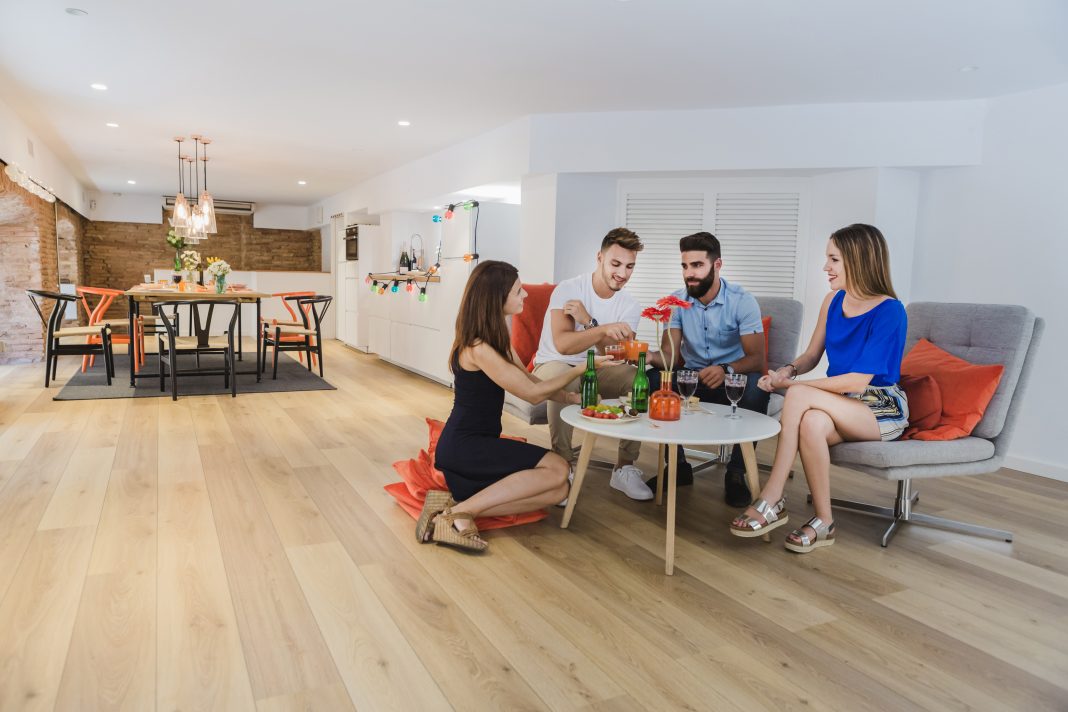

The Product With the Reputation It Earned and Has Been Trying to Live Down
Laminate flooring earned its mixed reputation in the late 1990s and early 2000s: thin products with printed surfaces that photographed like wood but looked obviously synthetic in person, that swelled dramatically at seams when moisture reached them, and that produced a distinctive hollow sound underfoot that said ‘cheap floor’ as clearly as anything visible.
The laminate available in 2025 is a genuinely different product in several important dimensions — thicker cores, more realistic surface textures, better locking systems, better moisture resistance, and better acoustic performance. The reputation lingers; the product has improved. Understanding what has actually changed and what limitations remain helps evaluate whether current laminate is appropriate for a specific application.
What Has Actually Improved
Thickness: early laminate was 6–7mm thick; quality current laminate is 10–14mm, which contributes to dimensional stability, reduced hollow sound underfoot, and a more substantial feel. Surface texture technology has advanced from flat printed surfaces to registered embossing — where the surface texture is aligned with the printed grain pattern, creating the tactile variation that makes real wood identifiable by touch. The best current laminate texture technology is genuinely difficult to distinguish from hardwood by touch.
Locking system quality has improved substantially: modern click-lock systems provide more positive engagement, better resistance to gapping, and in some products the ability to fold-and-tap installation that doesn’t require a rubber mallet and tapping block for every joint.
What Hasn’t Changed and Still Matters
Core material sensitivity to moisture is the persistent limitation that differentiates laminate from luxury vinyl plank most clearly. Laminate’s HDF core absorbs water when exposed — the seams between planks are the primary entry point, and once water reaches the core, the swelling that occurs is irreversible and visible. ‘Water resistant’ labeling on some laminate products refers to the surface’s ability to resist brief moisture exposure; it does not mean the product can handle sustained moisture at seams or edges.
This limitation makes laminate genuinely inappropriate for any application with regular moisture exposure: bathrooms, kitchens near the sink and dishwasher, mudrooms, and any below-grade application where moisture vapor from concrete is a concern. In these applications, luxury vinyl plank’s true waterproof construction is the relevant performance advantage.
Sound Performance: Where Laminate Still Needs Help
The hollow-sound problem of early laminate has been reduced by increased core thickness and better underlayment, but not eliminated. Laminate produces more impact sound transmission than LVP or hardwood on equivalent subfloors, making it a less appropriate choice for upper-floor rooms in households where noise transmission to lower floors is a concern.
Quality acoustic underlayment (separate from the thin foam underlayment included with some products) reduces but doesn’t eliminate this characteristic. Products with pre-attached underlayment of greater thickness and density perform better than those with thin pre-attached foam. If laminate is the choice for an upper-floor room, specify the thickest available product with the best sound rating (IIC and STC ratings appear in product specifications for some products).
Where Laminate Still Makes Excellent Sense
Laminate’s cost advantage over hardwood and premium LVP remains significant: $1.50–$4 per square foot for quality laminate versus $4–$8 for quality LVP and $6–$12 for hardwood. In low-moisture, mid-traffic applications — a bedroom, a home office, a living room in a climate-controlled home — laminate provides excellent aesthetics and adequate performance at a cost that makes it the most value-efficient choice available.
For rental property owners who need to provide attractive, durable flooring at minimum cost, and for homeowners with a defined renovation timeline where the floor will be replaced within 10–15 years, laminate’s cost-to-performance ratio is genuinely compelling. The appropriate choice question is whether the application’s conditions (moisture levels, traffic, acoustic requirements) are within laminate’s performance envelope — not whether laminate is ‘as good’ as alternatives that cost twice as much.