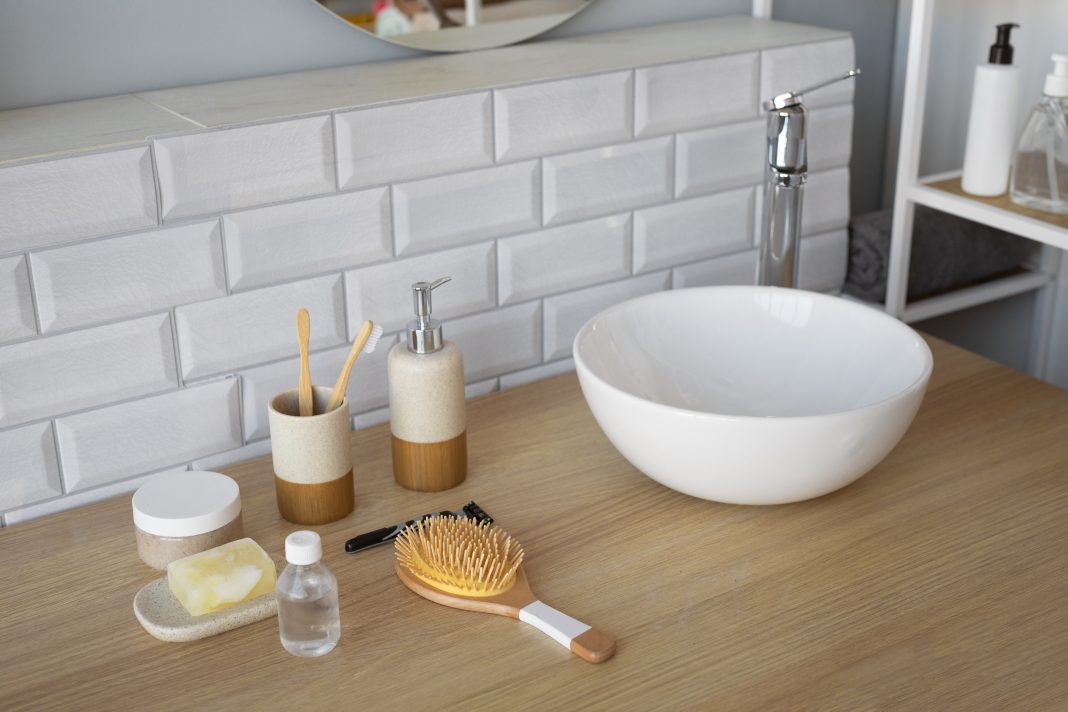

The Surface That Gets More Daily Contact Than Any Other
The bathroom vanity countertop is touched more times daily than virtually any other surface in the home — placement and retrieval of toiletries, the hands that brace against it during face washing, the water that splashes from the sink, the cleaning products applied to it weekly. Despite this intensive daily contact, bathroom countertop selection is primarily an aesthetic decision for most homeowners, with performance characteristics receiving secondary consideration.
The performance variables that determine whether a bathroom countertop works well over years of daily use — stain resistance, reaction to cleaning products, edge durability, and moisture response — are often discovered after installation rather than evaluated before it.
Marble: The High-Maintenance Choice That Requires Informed Decision-Making
Marble in bathrooms is among the most aesthetically compelling countertop choices and among the most demanding to maintain. The calcium carbonate composition that makes marble beautiful also makes it reactive to acidic substances — toothpaste, mouthwash, some facial cleansers, perfume, and nail polish remover all have the potential to etch the polished surface chemically, leaving dull spots that cleaning can’t restore.
The honest summary: marble in a bathroom works beautifully for households who understand these limitations, seal the marble twice yearly, wipe up products promptly, and accept that the surface will develop a patina over time as the etching accumulates into an overall softened finish. It does not work well for households who want a maintenance-free countertop or who will not consistently seal and protect it.
Quartz: The Low-Maintenance Option With One Significant Limitation
Engineered quartz countertops (Caesarstone, Silestone, Cambria) are the bathroom countertop specification that combines good aesthetics with genuine practicality: non-porous (never needs sealing), consistent color and pattern, stain-resistant, and resistant to most cleaning products. For the majority of bathroom use cases, quartz is the most practical all-around choice.
The limitation worth knowing: quartz contains polymer resin binders that are sensitive to prolonged direct heat (hair straighteners, curling irons placed on the counter surface while still hot) and to UV exposure (quartz counters in south-facing bathrooms near windows may fade over years of sun exposure). Using a heat mat under styling tools — a $10 habit — eliminates the heat sensitivity problem.
Solid Surface (Corian and Similar): The Repairability Advantage
Solid surface countertops (Corian, Avonite, and similar products) are acrylic-based materials with the same color throughout the thickness — meaning scratches and surface damage can be sanded out and the surface polished back to original condition. This repairability is the feature that distinguishes solid surface from every other countertop material: damage isn’t permanent.
Solid surface integrates seamlessly with undermount sinks of the same material, creating a truly seam-free countertop-to-sink junction that eliminates the bacteria-trapping junction that exists with all undermount sinks in stone or quartz counters. In children’s bathrooms, this hygienic advantage is meaningful; in any bathroom where the junction between countertop and sink is a cleaning challenge, the seamless integration simplifies maintenance significantly.
The Practical Width and Overhang Question
Bathroom countertop width and overhang affect daily function in ways the aesthetic focus of countertop selection misses. A countertop with a 1-inch overhang over the vanity cabinet face means hands bracing against the counter have the support close to the cabinet edge; a 2-inch overhang creates a more comfortable gripping edge. Standard overhang is 1–1.5 inches; increasing to 2 inches requires explicit specification.
Counter depth in front of the sink is determined by the sink’s position in the counter and the depth of the counter material to the wall. The space between the back of the sink and the wall should accommodate the faucet and a reasonable clearance for turning it — typically 4 inches minimum. Countertops templated by a fabricator account for this; DIY countertop projects sometimes discover inadequate clearance after the sink is set.