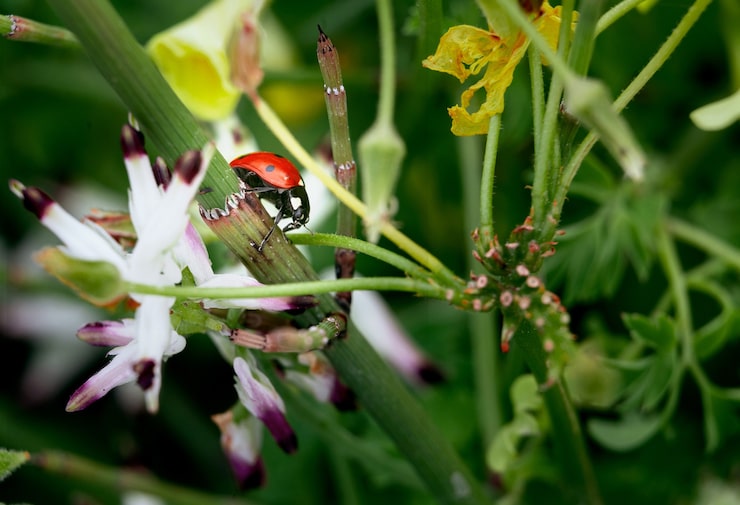

The Garden as an Ecosystem
A residential garden is not an isolated planting environment — it’s embedded in a regional ecosystem and interacts with the wildlife of that ecosystem whether the gardener intends it to or not. Songbirds, pollinators, beneficial insects, predatory insects, small mammals, reptiles, and a vast diversity of soil organisms all have relationships with the garden that determine its health as much as anything the gardener does deliberately.
The approach that produces the most resilient, lowest-maintenance garden is one that works with these relationships rather than against them — attracting wildlife that performs useful ecological functions while managing wildlife that causes damage, using the simplest and most targeted interventions available.
Pollinators: The Wildlife Most Vegetable Gardeners Need
Most vegetable crops require pollination — the transfer of pollen from one flower to another — to produce fruit. Tomatoes, peppers, squash, cucumbers, beans, and the majority of fruiting vegetables depend on bee activity for this transfer. A garden with inadequate pollinator populations produces poorly — few fruits per plant, small or misshapen fruits, and inconsistent yield.
Attracting pollinators is primarily a planting decision: flowering plants adjacent to vegetable gardens attract bees and other pollinators that then visit the vegetable flowers in the same area. Native flowering plants — particularly those that bloom in succession from early spring through fall — provide continuous forage that supports pollinator populations through the season. Avoiding pesticide applications during bloom periods (which kill pollinators on contact) is equally important.
Songbirds: The Natural Pest Control Team
Songbirds are the most effective and most persistent insect pest controllers in the garden — a family of Carolina wrens may remove thousands of caterpillars, aphids, and other garden pests from the immediate area daily. Attracting them requires habitat: native shrubs with berries, water sources, and nesting habitat (natural areas with leaf litter and brush where ground-nesting birds can overwinter and insect populations can establish).
The practices that attract songbirds most effectively: water (a birdbath with moving water, since the sound of moving water attracts birds more effectively than still water), native berry-producing shrubs (dogwood, holly, viburnum, serviceberry), and leaving dead standing trees or large branches (snags) that provide cavity nesting sites for wrens, chickadees, and woodpeckers. These habitat features also support the insect diversity that songbirds require as food.
Deer: The Wildlife That Requires Active Management
Deer are the garden pest that most often triggers a complete rethinking of the garden’s plant palette. A deer population that visits the garden nightly can consume entire plantings overnight, making it effectively impossible to grow many vegetables and ornamentals without physical exclusion.
The management hierarchy: physical exclusion (fencing at adequate height — 8 feet for reliable deer exclusion, 6 feet for moderate pressure) is the only reliably effective long-term solution. Repellents (spray products containing putrefied eggs, predator urine, or other scent deterrents) provide seasonal protection when applied before deer feeding patterns establish, but require consistent reapplication and become less effective as deer habituate. Plant selection (deer-resistant species) reduces but doesn’t eliminate deer damage — deer will eat ‘resistant’ plants when hunger pressure is high.
Ground Squirrels and Voles: The Underground Damage
Voles (small rodents that create tunnel networks through garden soil and lawn) and ground squirrels (larger burrowing rodents that damage root systems and steal bulbs) create damage that appears mysterious — plants that wilt and die without obvious above-ground cause, bulbs that simply don’t emerge in spring, or root vegetables with damaged root systems discovered at harvest.
Confirmation is the first step: a probe wire inserted into the soil near a declining plant that encounters a hollow tunnel confirms vole activity. Vole management: trapping in active tunnel systems (the same snap traps used for mice, placed in tunnel openings and covered), hardware cloth barriers around specific high-value plants (buried at least 12 inches deep to prevent tunneling under), and removing dense ground cover that provides runway cover for their movement. Ground squirrels require a different approach given their size and tunnel depth — live trapping and relocation or professional pest management.