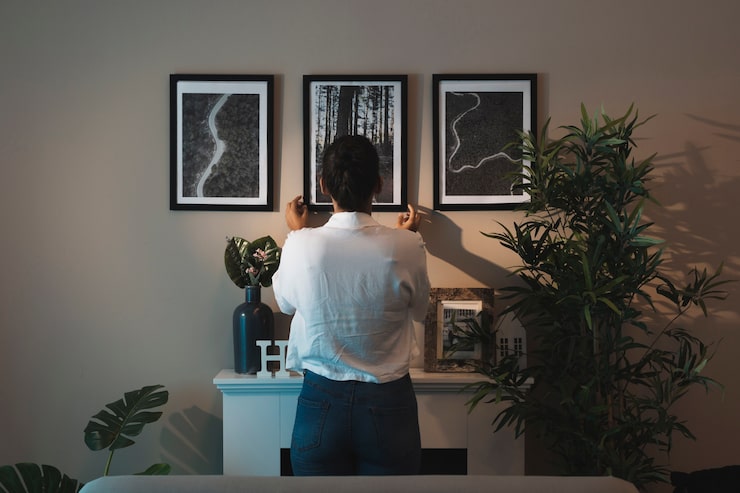

The Art That Stays in Boxes
Most art collections in residential homes are smaller than their owners realize and less accessible than they should be. A household that has acquired art over years — travel purchases, inherited pieces, gifts, collected prints — typically has more than they display, with the remainder in storage because they ‘don’t have space’ or haven’t found the right place. The pieces in storage were loved enough to acquire; they’re not displayed because the display hasn’t been figured out, not because the art isn’t good enough.
Making existing art work for a room requires treating the collection honestly and practically — understanding what you actually have, which pieces work in which locations, and how to display them so each piece is seen and experienced rather than overlooked.
The Inventory Before the Display
Before planning where any piece goes, take stock of everything you have. Lay out or photograph every piece — hung, stored, leaned against walls, in tubes, in portfolios. Note each piece’s dimensions, framing (or lack thereof), condition, and the associations that make it worth keeping.
This inventory often reveals surprises: pieces that were forgotten in storage that are actually among the best in the collection, framed pieces that are damaged and need attention before display, and a clearer sense of what the collection’s themes, colors, and character actually are when seen together rather than one piece at a time. The inventory becomes the basis for a display plan rather than making placement decisions one piece at a time without context.
Grouping by Theme, Color, or Medium
A collection of varied art — different subjects, periods, and mediums — creates a more cohesive display when grouped by a unifying principle than when distributed randomly throughout a home. Grouping all works on paper together creates a coherent wall; grouping all works that share a color palette creates a visually unified gallery; grouping all travel photographs from a specific trip or region creates a narrative display.
This doesn’t mean every piece in the home must match every other piece — it means that within any one wall or display area, a unifying thread gives the grouping coherence. A living room wall with all the abstract work; a hallway with all the figurative drawings; a bedroom with all the works from a specific decade of the collector’s life. The organization makes the collection readable.
Framing Consistency Within Groupings
Mismatched frames in a gallery grouping — different widths, different colors, different materials — create visual noise that competes with the art. This doesn’t mean every piece needs an identical frame (a collection of identical frames reads as manufactured rather than collected); it means that within any single grouping, a consistent framing approach creates coherence.
The approach that works: choose one or two frame finishes that work with the room’s metal and material palette (all black frames, all natural wood, all white-painted wood, or a combination of black and warm wood) and reframe pieces within the collection that have incompatible existing frames. Reframing a print costs $50–$200; the visual improvement in the grouping’s coherence is immediate and significant.
Rotating the Collection
Not every piece needs to be displayed simultaneously. A rotating display — changing what’s hung on a wall seasonally or annually — keeps the displayed work fresh and visible, prevents the habituating effect where art becomes invisible through familiarity, and allows pieces in storage to have their moment on the wall.
A simple rotation practice: designate two or three walls as ‘rotating’ walls and change what’s displayed on them twice yearly — once in spring and once in fall, coinciding with the seasonal transitions when the home is being refreshed anyway. The pieces coming down go into storage with proper documentation; the pieces going up are re-experienced with fresh eyes after their time off the wall.